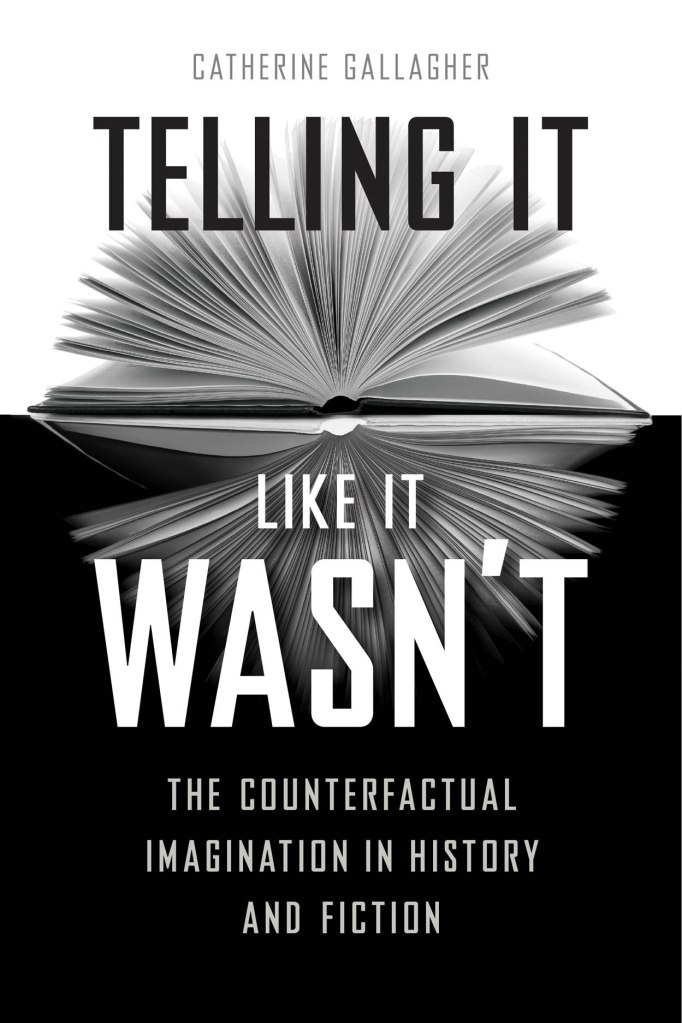
Inventing counterfactual histories is a common pastime of modern day historians, both amateur and professional. We speculate about an America ruled by Jefferson Davis, a Europe that never threw off Hitler, or a second term for JFK. These narratives are often written off as politically inspired fantasy or as pop culture fodder, but in Telling It Like It Wasn’t, Catherine Gallagher takes the history of counterfactual history seriously, pinning it down as an object of dispassionate study. She doesn’t take a moral or normative stand on the practice, but focuses her attention on how it works and to what ends—a quest that takes readers on a fascinating tour of literary and historical criticism.
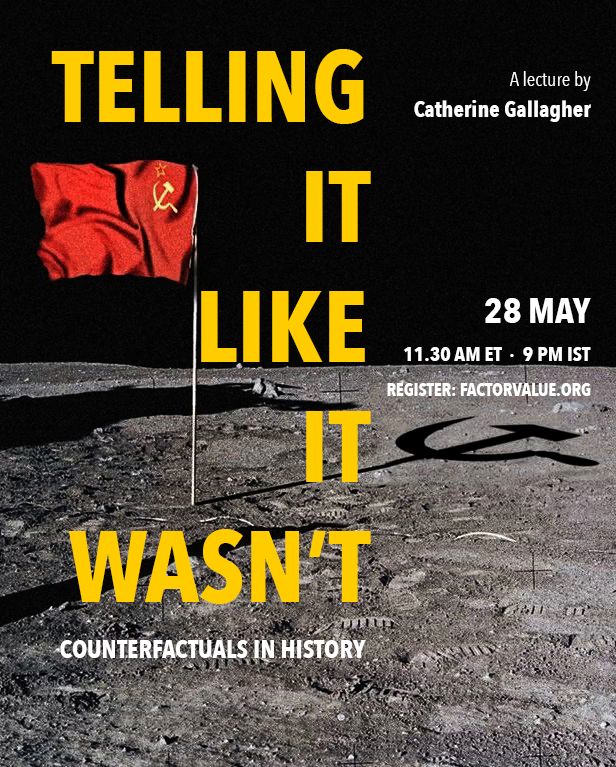
To discuss her book, we’re honoured to welcome Professor Gallagher, the Emerita Eggers Professor of English Literature at UC Berkeley. Her books include two edited volumes, The Making of the Modern Body: Sexuality and Society in the Nineteenth Century (with Thomas Laqueur); and the Bedford Cultural Edition of Aphra Behn’s Oroonoko: or, The Royal Slave. And she has authored five works of literary history and criticism. Her 1994 book, Nobody’s Story, won the MLA’s James Russell Lowell Prize for an outstanding literary study, and the American Philosophical Society awarded her 2018 book, Telling It Like It Wasn’t: The Counterfactual Imagination in History and Literature, the Jaques Barzun Prize for the year’s best book in cultural history.
 Fact or Value